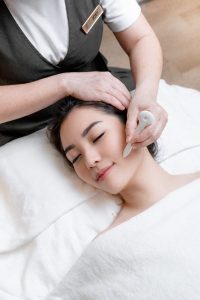
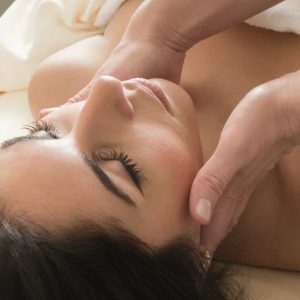
What’s all the hype about manual lymphatic drainage facials? As it turns out, there IS a good reason for it.
Manual Lymphatic Drainage was developed in the 1930s by Danish doctors Emil and Estrid Vodder to treat conditions involving chronic water retention and swollen lymph nodes, such as chronic sinusitis and catarrh. And, it has found its way to our skincare regimen.
Why?
Because science has proven that our lymphatic system affects our skin clarity, inflammation, cellular renewal cycle, and ageing process.
Think of our lymphatic system as our body’s silent helper which is also called the second circulatory network. Unlike our blood, It does not deliver nutrients to our organs. Instead, it focuses on cleaning up waste in order to keep our immune system in check.
And yes, it has a big role in how our skin looks and feels.
Every day, roughly two litres of fluid leak into our skin’s tissues. This fluid, known as lymph fluid, carries excess proteins, cellular debris, bacteria, and other byproducts from our body’s daily work. Our lymphatic network collects it and moves it to nearby lymph nodes, where it’s filtered to remove harmful particles in order to support our immune system.
If our lymphatic circulation is sluggish, toxins and fluid will build up, leading to puffiness, dullness, or breakouts. When it is well circulated, our skin stays hydrated, youthful, and radiant. It even helps calm irritation and improves resilience of sensitive skin.
We can help it along, too.
Simple habits like staying hydrated, exercises, getting massages, and eating well all keep our lymph flowing. Think of it as giving our skin a backstage pass to stay healthy, clear, and glowing—without lifting a finger.
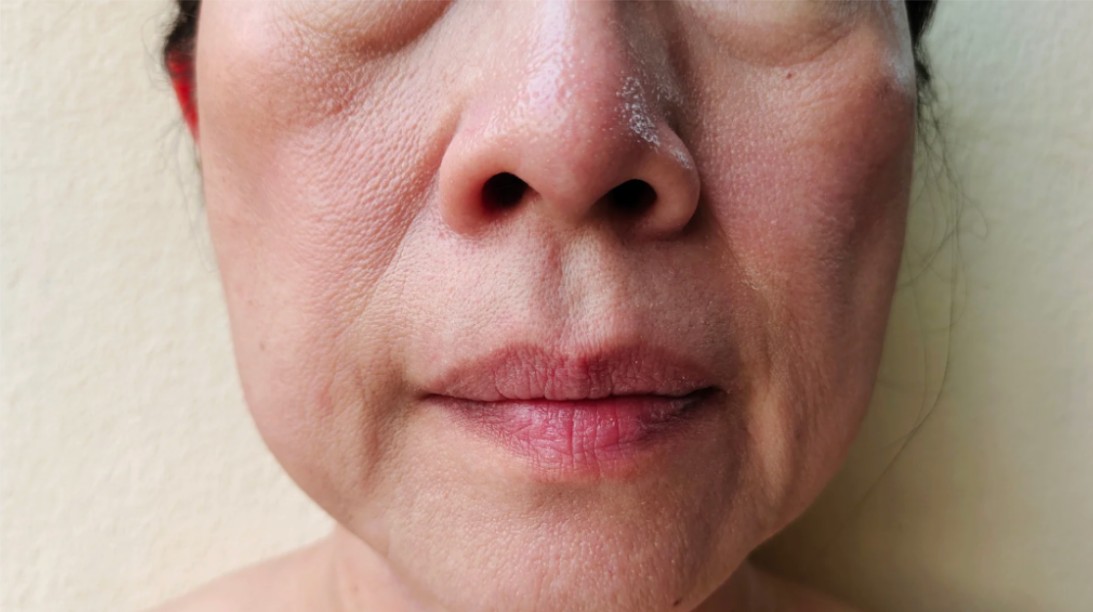
Poor lymphatic circulation contribute to:
Slow lymph drainage causes fluid to accumulate in tissues, especially under our eyes and along the cheeks, causing our face to look heavier and pudgy. Persistent puffiness may also strain delicate skin structures, leading to premature ageing.
When our lymphatic function slows down, metabolic waste and toxins remain longer in our skin, leaving it looking tired and lacklustre. Lymph circulation, when done correctly, helps maintain skin radiance, keeping the complexion fresh and evenly toned.
Poor lymph circulation can lead to the accumulation of debris, bacteria, and inflammatory byproducts in our skin layers that results in clogged pores, blackheads, and acne flare-ups. Manipulating lymphatic fluid helps clear these impurities, lowering the risk of breakouts.
Reduced lymph flow can cause our skin to be more prone to sensitivity and allergies. Toxins and excess fluid that are not cleared efficiently may worsen redness and irritation. A well-functioning lymph fluid flow can help calm and strengthen our skin barrier.
Healthy lymphatic function delivers immune cells and nutrients to damaged tissues, promoting repair. Poor drainage slows this process, making blemishes, minor injuries, and inflammation more challenging to heal.
Fluid and toxin accumulation can leave our face looking heavy, particularly around the jawline, cheeks and undereyes. Hence, manipulating lymphatic fluid movement restores lightness and enhances natural contours.
Recent studies (2020–2024) emphasise the lymphatic system’s importance for youthful, healthy skin. With age, skin lymph vessels naturally decrease in number and efficiency, slowing tissue repair and reducing radiance. Lymph vessels also help control inflammation by draining substances that trigger redness, puffiness, and flare-ups, keeping skin calmer and less irritated.
There is growing evidence that proper lymph flow also supports the skin’s structure. Sluggish lymph circulation can affect connective tissues, including collagen, making skin less firm. Treatments that stimulate lymph flow—like MLD facials, gentle massage, and movement-based techniques—are increasingly popular because they not only reduce puffiness but also promote clearer, calmer, and more resilient skin.
MLD Facial is a gentle massage that encourages lymph movement under the skin. Unlike deep-tissue facial massages, MLD uses extremely light pressure to move lymph fluid through delicate vessels. Firm pressure can collapse these fragile channels that can result in adverse consequences. Hence, choosing a trained therapist is essential for best result.
The technique relies on slow, rhythmic strokes along our facial lymphatic pathways toward key lymph nodes in the neck, jawline, and behind the ears. Skin-stretching motions stimulate lymph flow, supporting detoxification and circulation without stressing the muscles.
The benefits of Manual Lymphatic Drainage Facial go beyond relaxation. By reducing fluid buildup, it helps alleviate puffiness, particularly under the eyes and along the cheeks. It also promotes a clearer, calmer complexion by supporting the removal of inflammatory byproducts. Over time, MLD facial enhances skin tone, radiance, and facial contours.
Because our face has many small lymph vessels near the surface, trained therapists use precise pressure, direction, and rhythm. When done correctly, MLD improves skin health and overall facial wellness. Today, facial MLD is a popular, non-invasive method to encourage detoxification, rejuvenation, and a naturally refreshed appearance.

Daily exposure to environmental pollutants, allergens, and stress can leave skin puffy and congested. MLD facials work gently on our face the lymphatic system to remove toxins, reduce fluid retention, and improve circulation. This supports the skin’s appearance and skin health.
La Source MLD facial drains away excess fluid build-up, slims heavy cheeks and lifts heavy jowls. Over time, this treatment reduces the look of puffiness and swelling.
Proper lymphatic drainage helps clear away toxins and metabolic waste from our skin. It also delivers more oxygen to tissues, boosting cellular function. These result in a younger, brighter and more radiant complexion.
Lymph vessels actively remove inflammatory byproducts that can cause redness or irritation. This makes MLD facial especially beneficial for sensitive skin. Regular sessions help calm and balance the skin while strengthening the skin barrier to reduce inflammation.
MLD facial encourages collagen fibroblast to enhance our skin’s natural healing mechanisms. Over time, our skin becomes firmer and more resilient.
Reduction of fluid build-up allows the skin to feel softer and look more uniform. Dead cells and waste are cleared more effectively. Skin texture improves, creating a smoother, more refined appearance.
Consistent lymphatic drainage slows inflammation and ageing processes. It also helps maintain healthy collagen production and improves skin cell’s resilience. Over time, this contributes to healthier, more youthful-looking skin.
MLD’s calming effects extend beyond the skin, helping reduce tension and promote relaxation. Stress reduction indirectly benefits skin by reducing flare-ups and sensitivity. Overall, it creates a holistic sense of wellbeing.
MLD facial is ideal for those with the following symptoms:
MLD facial is more than a skincare trend.
It is scientifically proven to reduce puffiness, brighten the complexion, support natural healing and regulate inflammation. Speak to us to find out more.
References
Structural and Functional Changes in Aged Skin Lymphatic Vessels by R.P. Kataru et al. (2022) — DOI accessible via PMC: https://www.ncbi.nlm.nih.gov/pmc/articles/PMC9261401/. PMC
The Emerging Importance of Lymphangiogenesis in Aging and Aging‑Associated Diseases by R.C. Ji et al. (2024) — ScienceDirect: https://www.sciencedirect.com/science/article/pii/S0047637424000757. ScienceDirect
Biomechanical Control of Lymphatic Vessel Physiology and Functions by Veronique Angeli & Hwee Ying Lim (2023) — Nature Communications article: https://www.nature.com/articles/s41423-023-01042-9. Nature
Breaking a Vicious Circle: Lymphangiogenesis as a New Therapeutic Target in Wound Healing by Filippo Renò & Maurizio Sabbatini (2023) — MDPI Biomedicines: https://www.mdpi.com/2227-9059/11/3/656. MDPI
Blood and Lymphatic Vascular Systems during Inflammation by S.S. Wang et al. (2023) — DovePress review: https://www.dovepress.com/interaction-between-blood-vasculatures-and-lymphatic-vasculatures-duri-peer-reviewed-fulltext-article-JIR. Dove Medical Press
Lymphatic Vessel: Origin, Heterogeneity, Biological Functions and Therapeutic Targets by Z. Hu et al. (2024) — Nature’s article: https://www.nature.com/articles/s41392-023-01723-x. Nature
Translational Frontiers: Insight from Lymphatics in Skin by Y. Jiang et al. (2024) — Frontiers in Physiology: https://www.frontiersin.org/journals/physiology/articles/10.3389/fphys.2024.1347558/full. Frontiers